


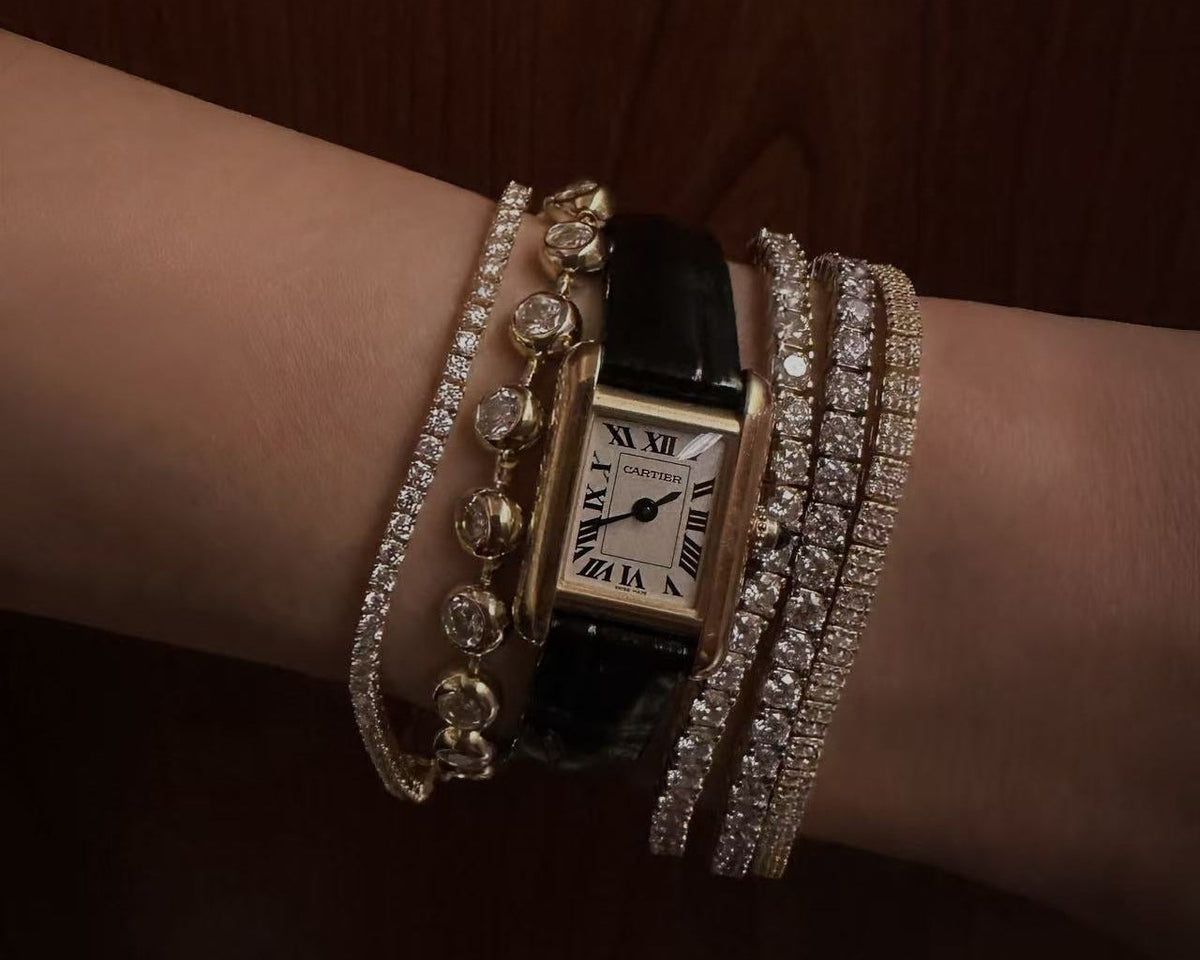


Diamond Guide
Everything you need to know before buying diamonds — from the 4Cs to shapes, and care. Just what you need to make an informed choice.
Diamond 4Cs
Cut determines how a diamond reflects light. A well-cut diamond returns light to the eye — that is brilliance. Cut is often considered the most important of the 4Cs, as it directly affects sparkle.

Diamonds range from colourless to faint yellow or brown. The less colour, the rarer and more valuable the stone. Colour is graded on a scale from D (colourless) to Z (light colour).

Carat measures weight, not size. Two diamonds of the same carat weight can appear different sizes depending on cut and shape. Choose carat based on your design, budget, and lifestyle.

Clarity measures the presence of internal inclusions or external blemishes. Fewer inclusions mean a cleaner stone. However, many inclusions are microscopic and do not affect beauty to the naked eye.

Diamond Shapes
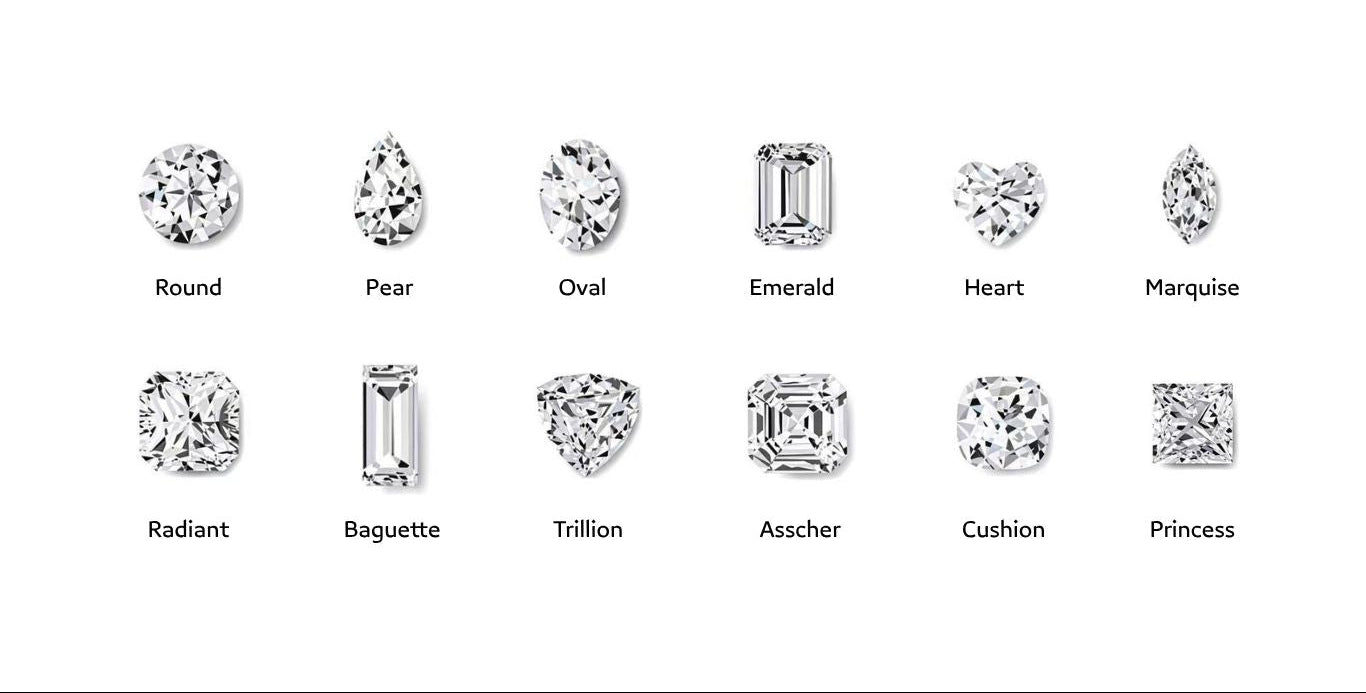
The most classic of all diamond shapes. Round brilliant diamonds are cut with 58 facets to maximize light return — giving them the highest level of sparkle. Timeless, versatile, and universally flattering.
Best for: Maximum brilliance, classic style, engagement rings
An elongated round with a similar brilliance but a different silhouette. The oval shape creates the illusion of length, making fingers appear longer and slimmer. Modern, elegant, and just a little unexpected.
Best for: Elongating the finger, a fresh take on classic brilliance
A step-cut diamond with long, clean lines and open facets. Unlike brilliant cuts, emerald cuts emphasize clarity and subtlety over sparkle. The result is sophisticated, architectural, and refined — an old soul shape with quiet presence.
Best for: Art Deco lovers, clean lines, understated elegance
A teardrop silhouette that combines the brilliance of a round with the distinctive shape of a marquise. The pear cut is romantic, unique, and draws the eye downward — creating a lengthening effect on the finger.
Best for: Statement pieces, a unique but timeless look
An elongated oval with pointed ends — the shape of a boat. Marquise cuts have one of the largest surface areas per carat, making the stone appear larger. Bold, dramatic, and distinctive.
Best for: Maximum finger coverage, a dramatic vintage look
A Guide to Diamond & Gemstone Options
What They Are
Pure carbon crystals formed deep within the Earth over 1 to 3 billion years under extreme heat and pressure. Each natural diamond is unique, carrying inclusions and characteristics from its ancient journey to the surface.
Key Qualities
- Hardness 10 on the Mohs scale — the hardest natural substance on Earth
- Brilliance Balanced white light reflection with controlled fire (colourful flashes)
- Rarity Finite supply — only a limited amount exists on Earth
- Value Retains worth over time; often considered an heirloom investment
Best For
Engagement rings, milestone pieces, and heirlooms with lasting significance.
What They Are
Chemically, physically, and optically identical to natural diamonds — pure carbon crystals created in a laboratory. They are real diamonds, with the same hardness (10 on Mohs scale), brilliance, and fire. They are distinguishable only by specialized equipment.
Key Qualities
- Hardness 10 on the Mohs scale — identical to natural diamonds
- Brilliance Same balanced white light reflection and controlled fire as natural diamonds
- Origin Mass-produced in factories over weeks, not billions of years
- Pricing Typically 20–40% less than natural diamonds of comparable quality
Best For
Everyday luxury, larger carat weights, and customers seeking the diamond look with a more accessible price point.
What It Is
A gemstone made of silicon carbide (SiC) — first discovered in a meteor crater in 1893 and now lab-created for jewellery. Moissanite is a diamond simulant, meaning it looks like a diamond but is a different material entirely. It is not a diamond.
Key Qualities
- Hardness 9.25 on the Mohs scale — very durable and suitable for daily wear
- Brilliance Higher refractive index (2.65–2.69) than diamonds, producing stronger rainbow flashes (fire)
- Visual Distinction Above 0.7 carats, moissanite's rainbow sparkle is noticeable to the naked eye
- Pricing Approximately 70–90% less than comparable lab-grown diamonds
Best For
Demi-fine jewelry, maximum sparkle and affordability.
What It Is
A synthetic gemstone made of zirconium dioxide (ZrO₂). First mass-produced in the 1970s, CZ is a common diamond simulant that looks like a diamond but is a completely different material.
Key Qualities
- Hardness 8–8.5 on the Mohs scale — prone to scratching and clouding over time
- Brilliance Initial sparkle that dulls quickly with daily wear
- Weight Significantly denser than diamonds — a CZ stone feels heavier for its size
- Pricing The most affordable option (approx. $20 per carat) — 1/600th the price of natural diamonds
Best For
Costume jewellery, temporary pieces, or prototyping designs.